

KASKOSAN’S MISSION
KaskoSan, founded by East European Roma living in the UK, works with the East European Roma community both digitally and offline since 2009. In collaboration with dedicated partners, we produce cultural content and consultancy. Our films, dramas, art performances and Romani language and cultural workshops aim to inspire critical thinking in terms of Roma inclusion and develop ways to maximize engagement.
Most Romani speakers and their descendants are subjects of anti-gypsy views and remain disengaged by Roma inclusion initiatives, while an overwhelming majority of Romani Gypsies carry on dealing with the multi-generational trauma of anti-gypsyism, isolation, mental ill-health, and intense poverty.
KaskoSan has been nurturing ‘Romanipe’, the emerging global Roma identity, since 2009 in central and Eastern Europe and since 2014 in the U.K. We have been growing a pro-active and self-assertive community that is proudly reclaiming its culture to erase centuries of misinformation about Romani speakers and their descendants.
OUR VALUES
Think Big. Act Bigger.
KASKOSAN PROJECTS & NEWS
Bringing hope and aspiration
KaskoSan is recruiting Romani-speaking Sessional Workers
KaskoSan is recruiting sessional Romani-speaking Community Advocates and a Project Documentation Sessional Worker for Empowering Roma Communities in Greater Manchester, our three-year project funded by The National Lottery Community Fund.
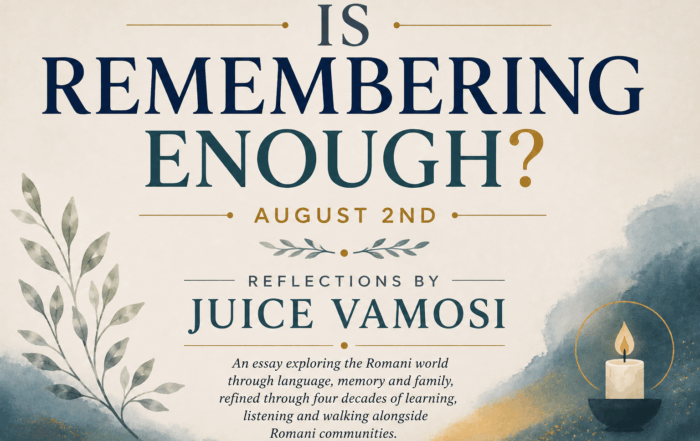
Is Remembering Enough?
Is Remembering Enough? Understanding the Romani World through Language, Family and Memory Written during the night of 2–3 August 2026, Roma Holocaust Memorial Day
Romanipe – A Fluid Identity Model by Juice Vamosi
Introduction Romani identity is often discussed in simplified or static terms. However, lived experience across Romani communities demonstrates that identity is neither fixed nor uniform. Instead, it is shaped by a complex interaction of cultural, historical and social factors that vary across time, place and group experience. This article introduces the Romanipe – A Fluid Identity Model, a conceptual framework designed to better understand the dynamic and relational nature of Romani identity. The model brings together key cultural dimensions and situates them within broader historical processes, including migration, linguistic contact and the long-term impact of antigypsyism.