

From Silence to Song: The Private Premiere of Gelem, Gelem
The screening sold out.
But what unfolded in the room went far beyond a film premiere.
This was a private screening of Gelem, Gelem — the first animated film created in the Romani language in the UK — shared with Roma families, the Roma Ladies’ Choir, artists, academics, councils, charities and long-standing allies who have walked this journey alongside us.
For many in the room, it was the first time they had ever watched an animation in their own mother tongue.
The film was co-produced with the Roma Ladies’ Choir. The women were not simply performers. They shaped the story itself. Their lived experiences — of migration, motherhood, fear, humour, resilience and survival — were carried into the animation through voice, music and image, without dilution or translation into someone else’s framework.
These were stories spoken as they are lived.
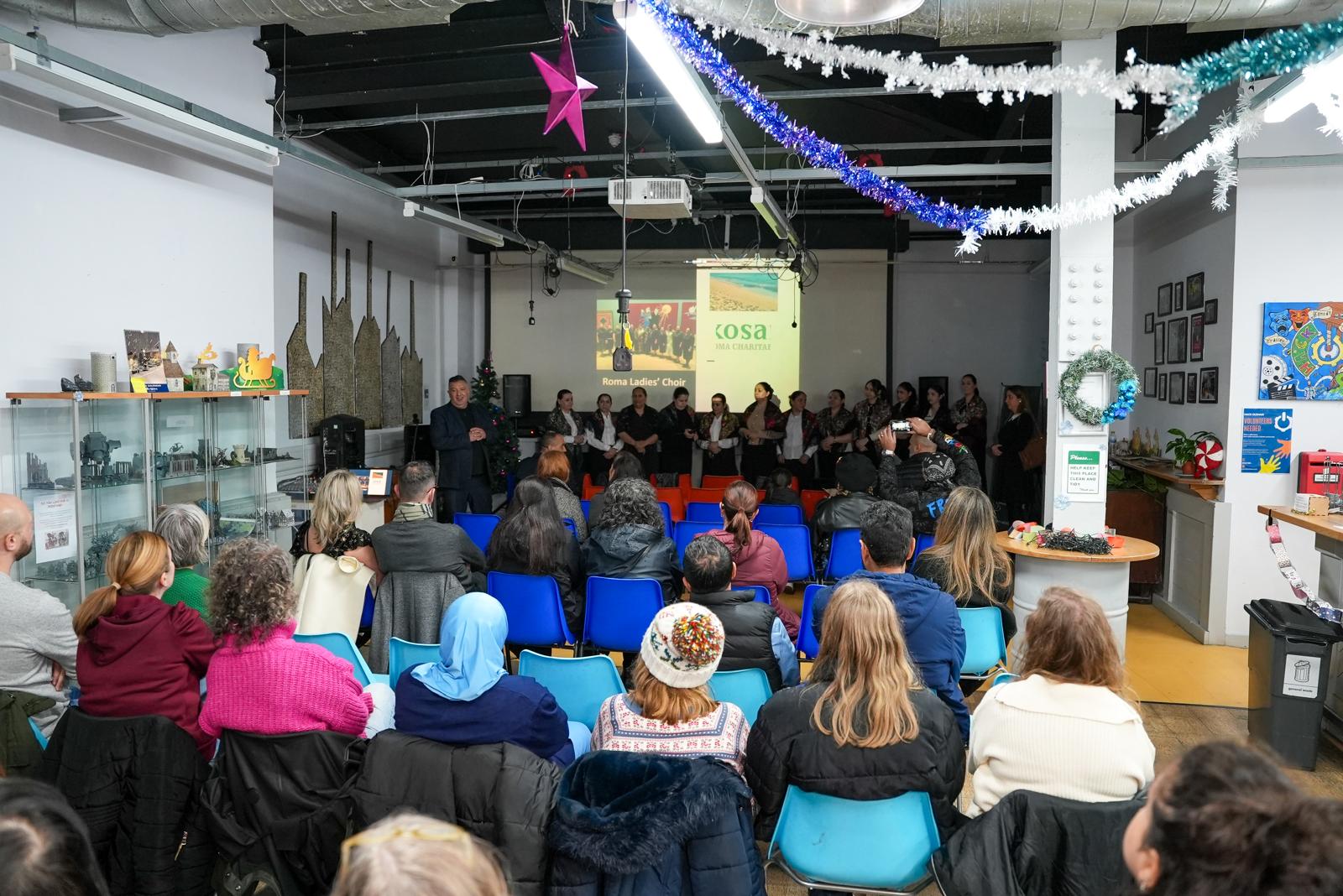
A full room for the first UK screening of a Romani-language animated film
Opening the space
The evening opened with words from Maria Palmai, producer of the film and leader of the Roma women’s group. Addressing Roma men in the UK and beyond, she spoke with clarity and care:
“Give space to your women.
When women grow, families and communities grow stronger.”
It was not a slogan. It was a statement grounded in years of work, trust-building and transformation inside the community.
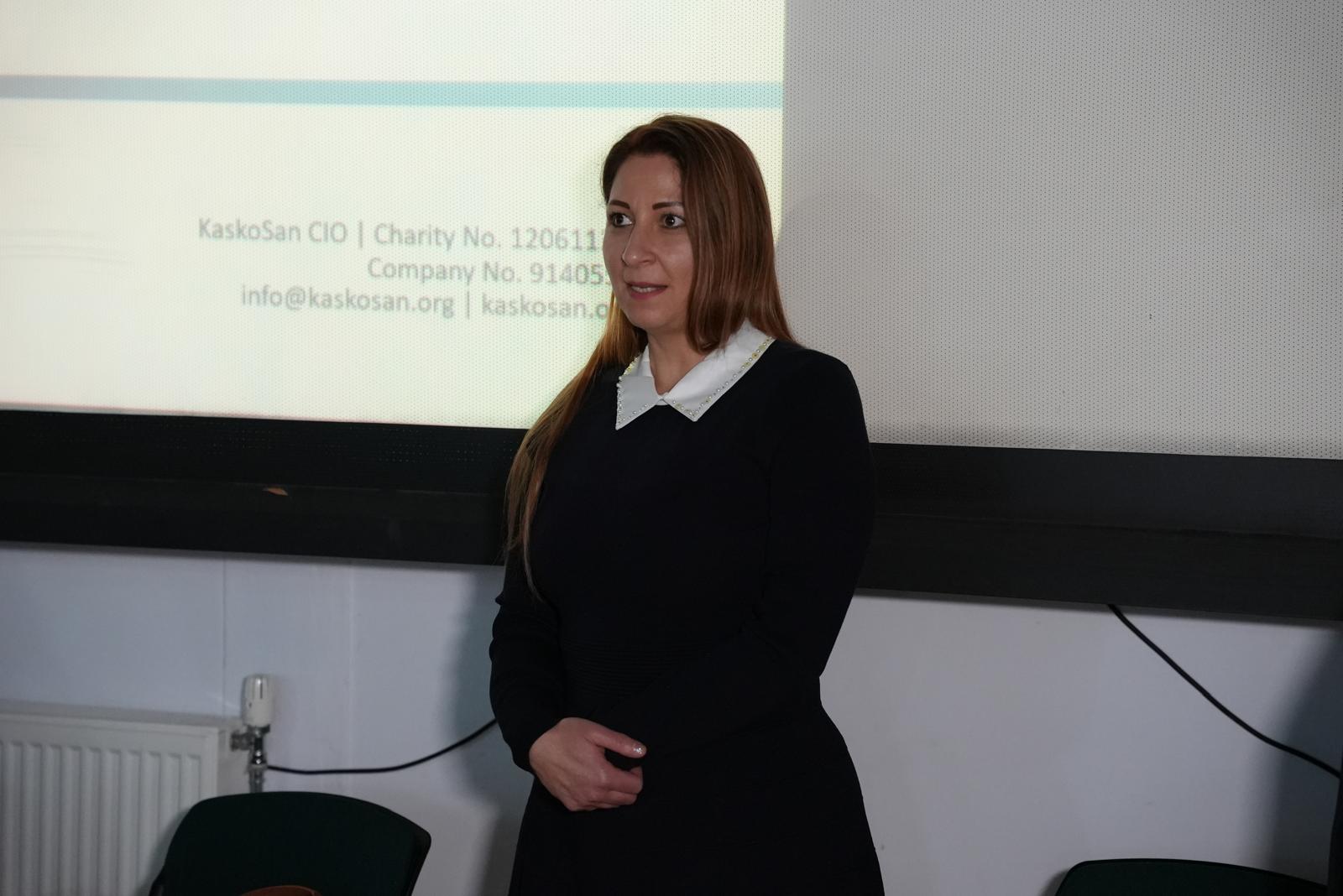
Opening reflections from Maria Palmai, the producer and leader of the Roma women’s group
A shared responsibility
Following the screening, reflections came from those who worked alongside the Roma women throughout the project.
Adelina Court, director of Gelem, Gelem, illustrator and animation director, spoke candidly about how the process reshaped her own creative practice. She reflected on the fact that although she has been animating films and visual stories for several years, working with real, lived experience marked a turning point in her career.
She spoke about the difference between imagined narratives and the responsibility of carrying other people’s truths:
“I’ve been animating stories for years, but this project changed how I understand storytelling. Working with real lives — not invented characters — is far more powerful. I learned more through listening than I ever could have by making something up.”
She described how the film was shaped by the lived experiences of traditional Roma women, including Ursari Roma women from the Bear Trainers community, as well as Maria’s experiences from horse-dealer and coppersmith Romani traditions:
“Listening to the Ursari Roma women — women from the Bear Trainers tradition — and to Maria’s experiences from horse-dealer and coppersmith communities opened up a world I hadn’t known before. It’s a world full of stories, knowledge and resilience. As an artist, you don’t leave that unchanged.”
Adelina went on to encourage other artists, cultural organisations and institutions to actively engage with Roma communities as collaborators and storytellers:
“I would encourage artists and institutions to choose Roma communities as a focus of their work. It’s still a largely unknown world, full of stories and cultural treasures. There is so much the rest of society can learn from Roma lived experience — if we are willing to listen and to share those stories responsibly.”
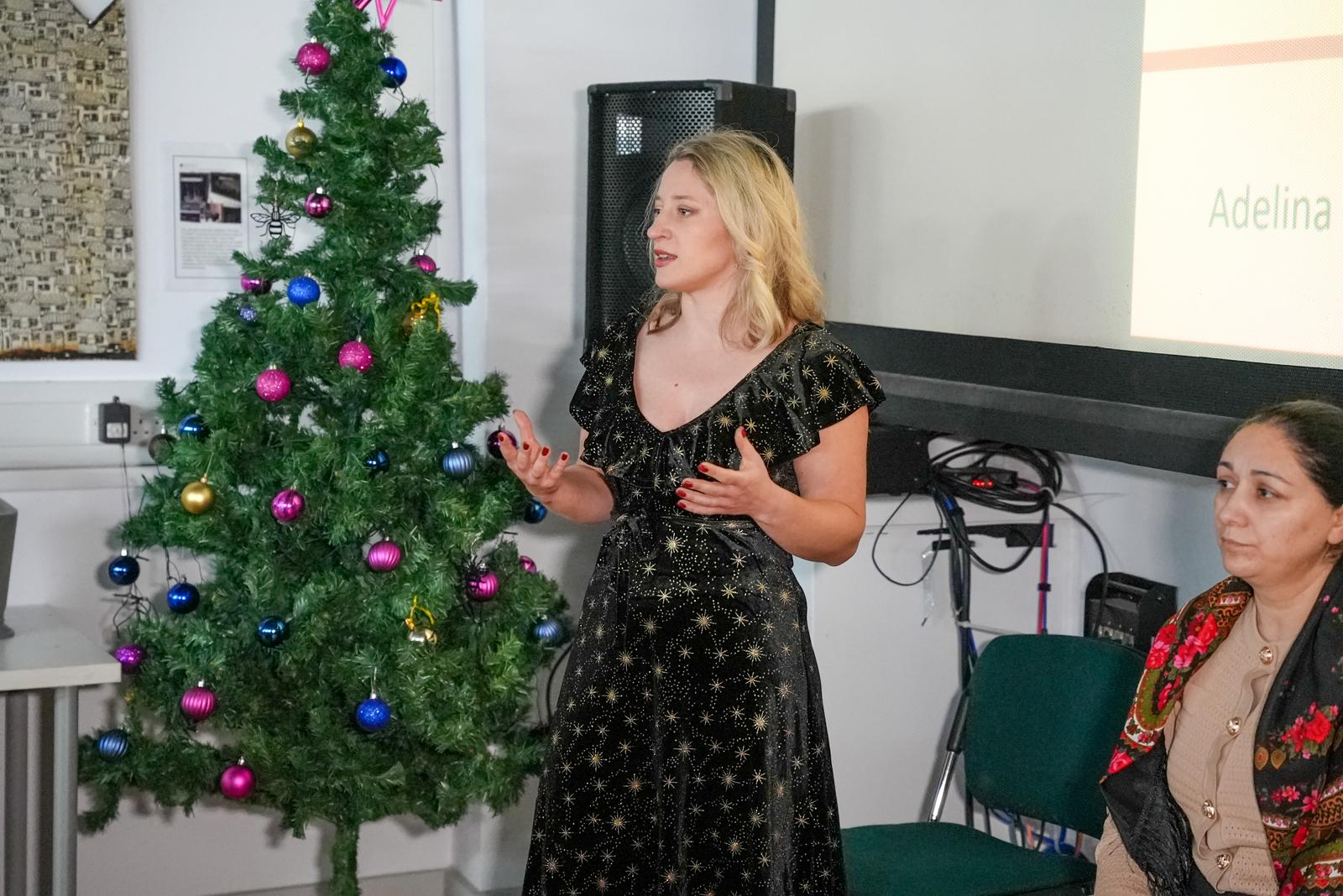
Adelina Court, Director of Gelem, Gelem, on responsibility, storytelling and collaboration
Voices from the room
Monica Bolmandir followed, grounding the conversation in lived experience and reflection. She spoke about what it meant for Roma women to encounter the “outside world” in a way that was not shaped by fear, rejection or harm — something many had only known from experiences in Eastern Europe.
For the women involved, she explained, Roma Connections opened a reality they had never been offered before:
“For many of us, this was the first time the outside world showed us something positive.
Back home, the outside world only brought negative experiences. Here, through Roma Connections 1 and 2, we experienced learning, development and growth.”
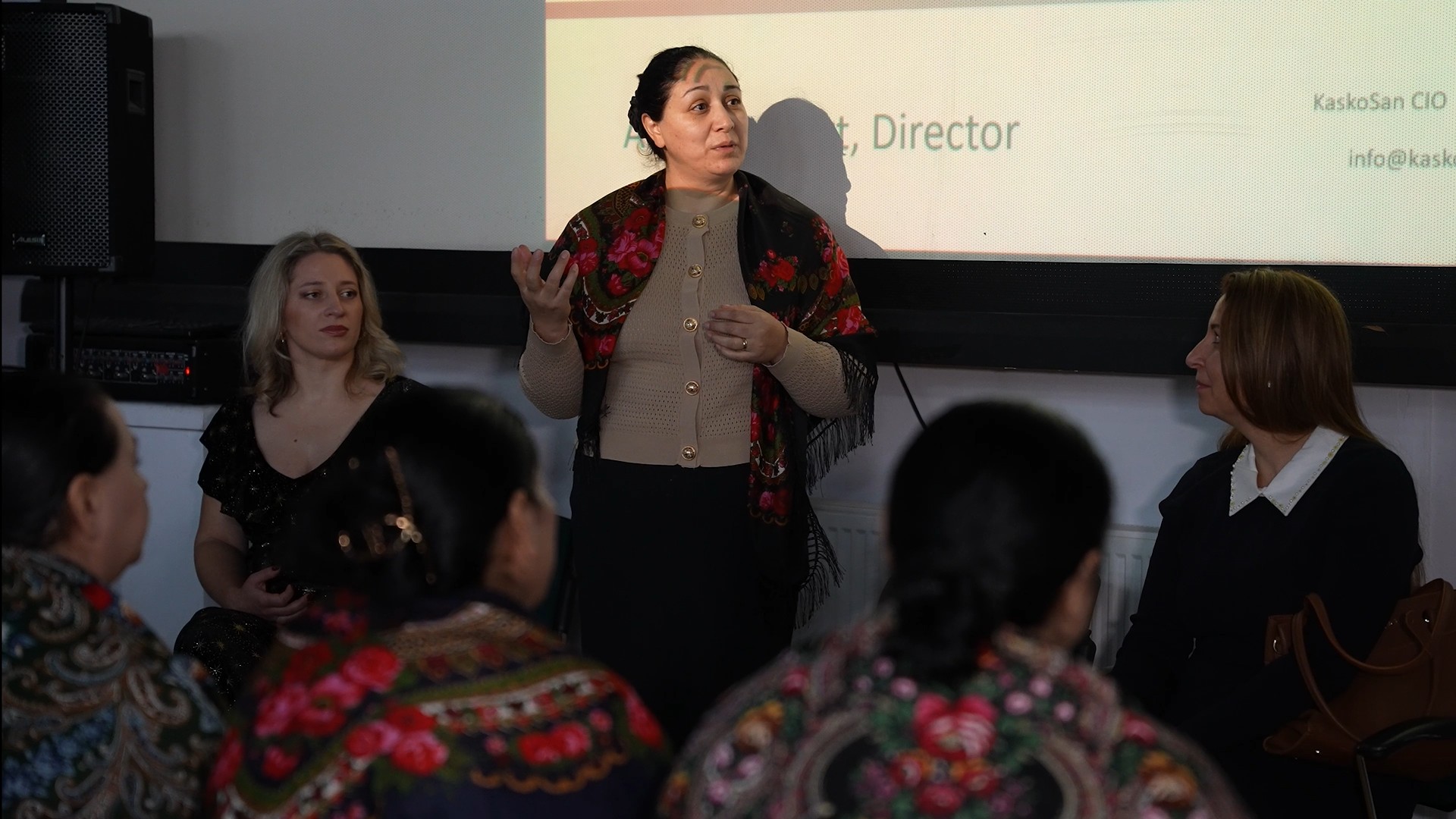
Monica Bolmandir, Roma Ladies’ Coordinator
She reflected on how traditional Roma women are deeply valued within their own communities, yet rarely recognised beyond them:
“Roma women raise children, support their husbands and hold the wider Roma community together. But outside of that, we were never shown that we had value. This project changed how we see ourselves.”
Monica closed with gratitude and hope — not only for those already involved, but for others still excluded:
“We are grateful for this opportunity, and we hope it continues — for us, and for other Roma women and community members who are still excluded from Roma inclusion initiatives.”
Recognition, language and belonging
Another deeply moving moment came from Toby Gorniak MBE, Netflix actor, who shared his personal response to the screening.
He spoke about what it meant to hear his own language in an animated film for the first time in his life — something he had never expected to experience:
“I’m 38 years old. And for the first time in my life, I sat and watched an animation in my own language.
It wasn’t just a film. It was visibility. It was belonging.”
He reflected on how unexpectedly emotional the moment was, and why it mattered:
“You don’t realise what’s missing until you see yourself properly represented. That moment stays with you.”
For him, the power of the film lay in the fact that Roma women’s voices were centred, unfiltered and unapologetic.
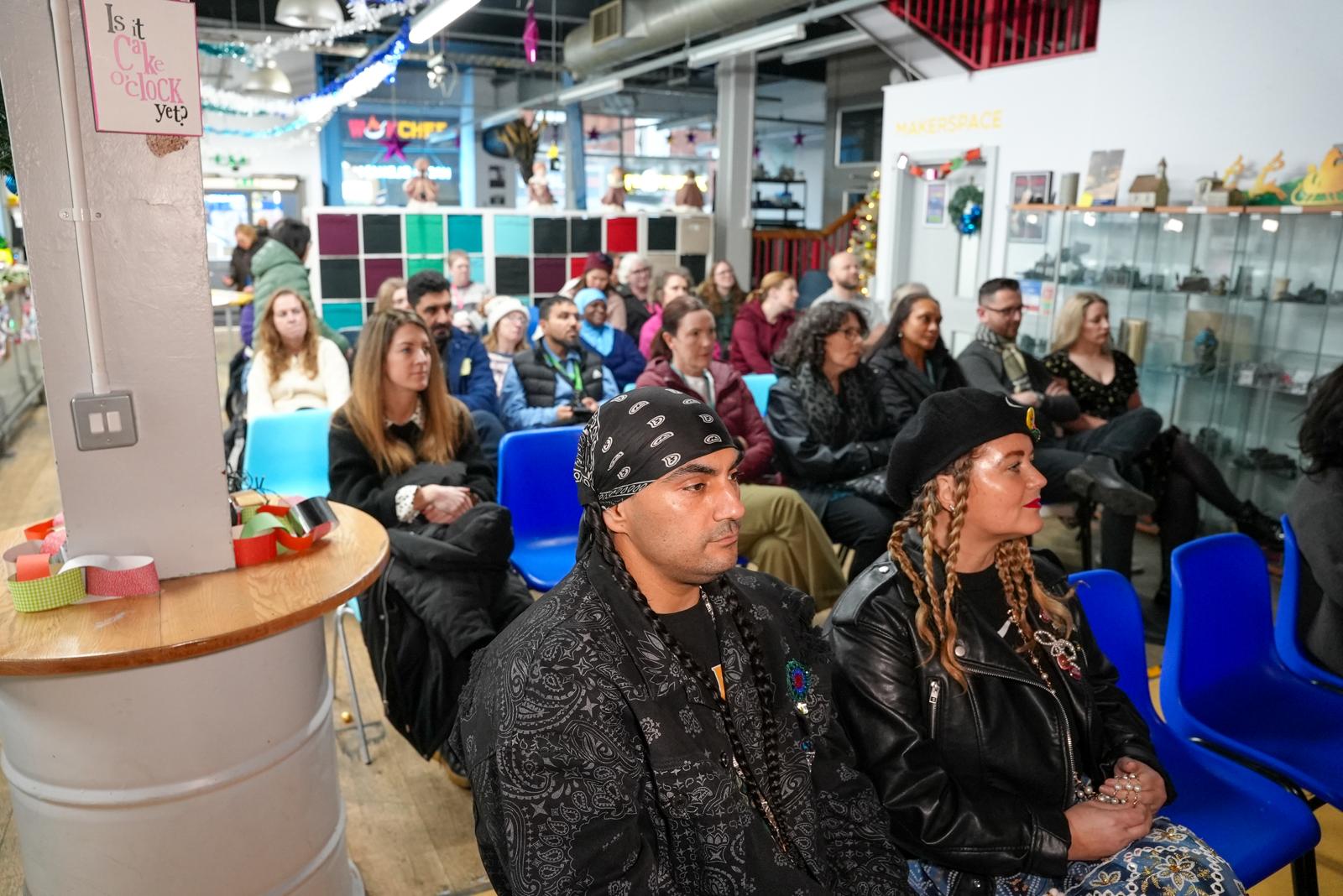
Toby Gorniak MBE and Jo Gorniak, coach in acting, producer
Creating new models of inclusion
In the closing reflections, Juice Vamosi situated Gelem, Gelem and the Roma Connections work within a wider structural context.
He spoke about how Kaskosan’s work has consistently focused on people who remain invisible both to mainstream society and to many Roma inclusion initiatives: families with little or no formal education, those living highly traditional Romani lives, and those most isolated from public services and cultural spaces.
Rather than adapting existing models that only reach a narrow group, Kaskosan has deliberately developed new, community-led approaches designed to reach those who are usually left out.
Juice also addressed a significant gap in public policy. Across Greater Manchester Combined Authority, none of the boroughs currently have a dedicated Roma inclusion strategy or anti-Gypsyism policy, nor does GMCA itself. This absence has real consequences for how services are designed, funded and delivered locally.
He pointed to Bradford Council as a positive example, where a Roma inclusion and anti-Gypsyism framework was developed with significant input from Kaskosan Roma Charity, shaped through consultation, discussion and community knowledge.
These kinds of policies, he explained, need to be properly designed, debated, voted on and implemented — with clear accountability and budgetary allocations — not only across Greater Manchester, but nationally, wherever Romani and Traveller communities live in England, Scotland and Northern Ireland.
“Inclusion isn’t something you announce. It’s something you build. It happens locally — in boroughs, schools, GP surgeries, NHS services, councils and local businesses — where people actually live their lives.”
He concluded by emphasising that without local strategies grounded in lived experience, inclusion remains abstract. With them, change becomes possible, measurable and sustainable.
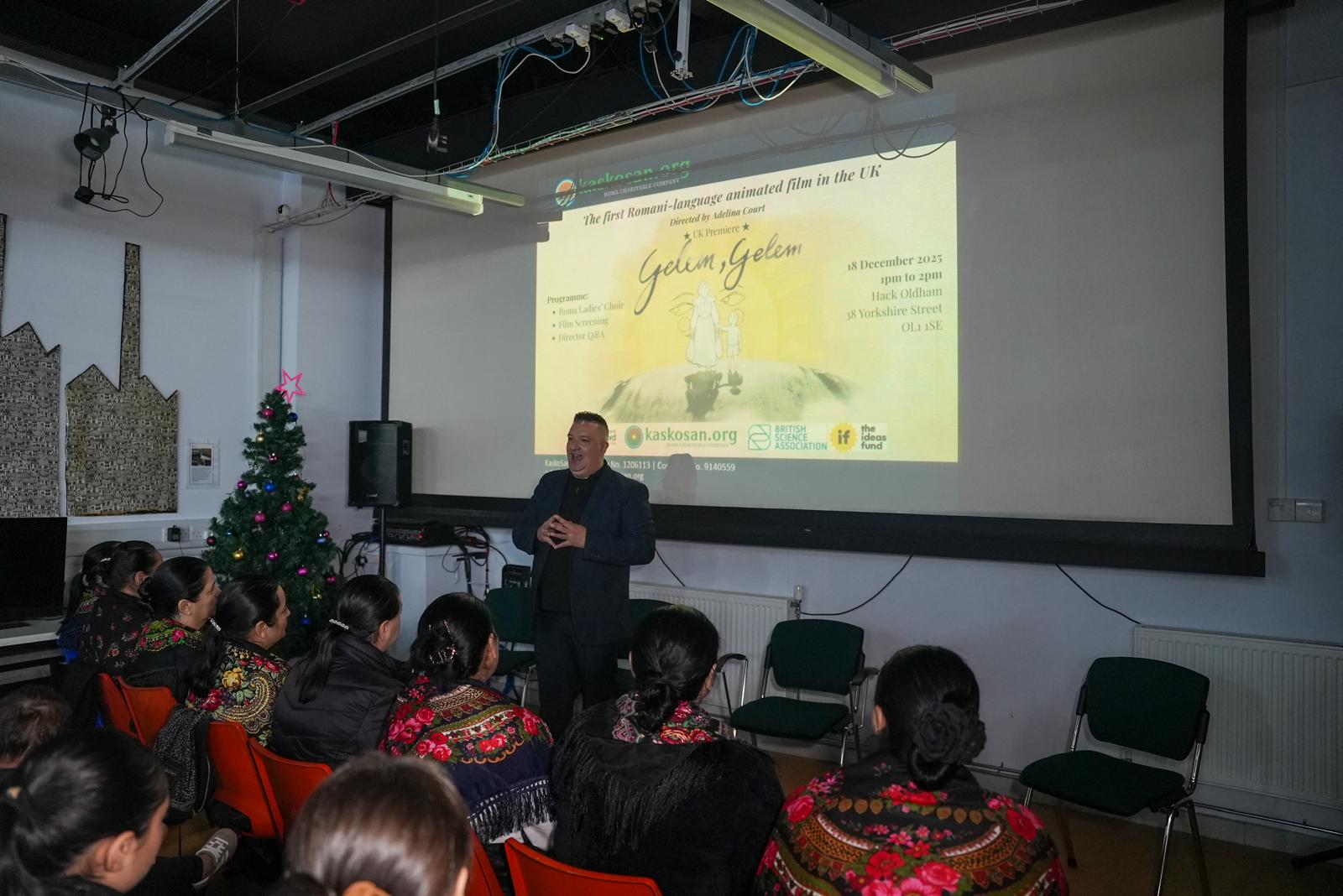
Juice Vamosi, founder of KaskoSan, calling for local strategies shaped with Roma communities
Looking back, and speaking gratitude
The evening also created space to look back — and to speak gratitude out loud.
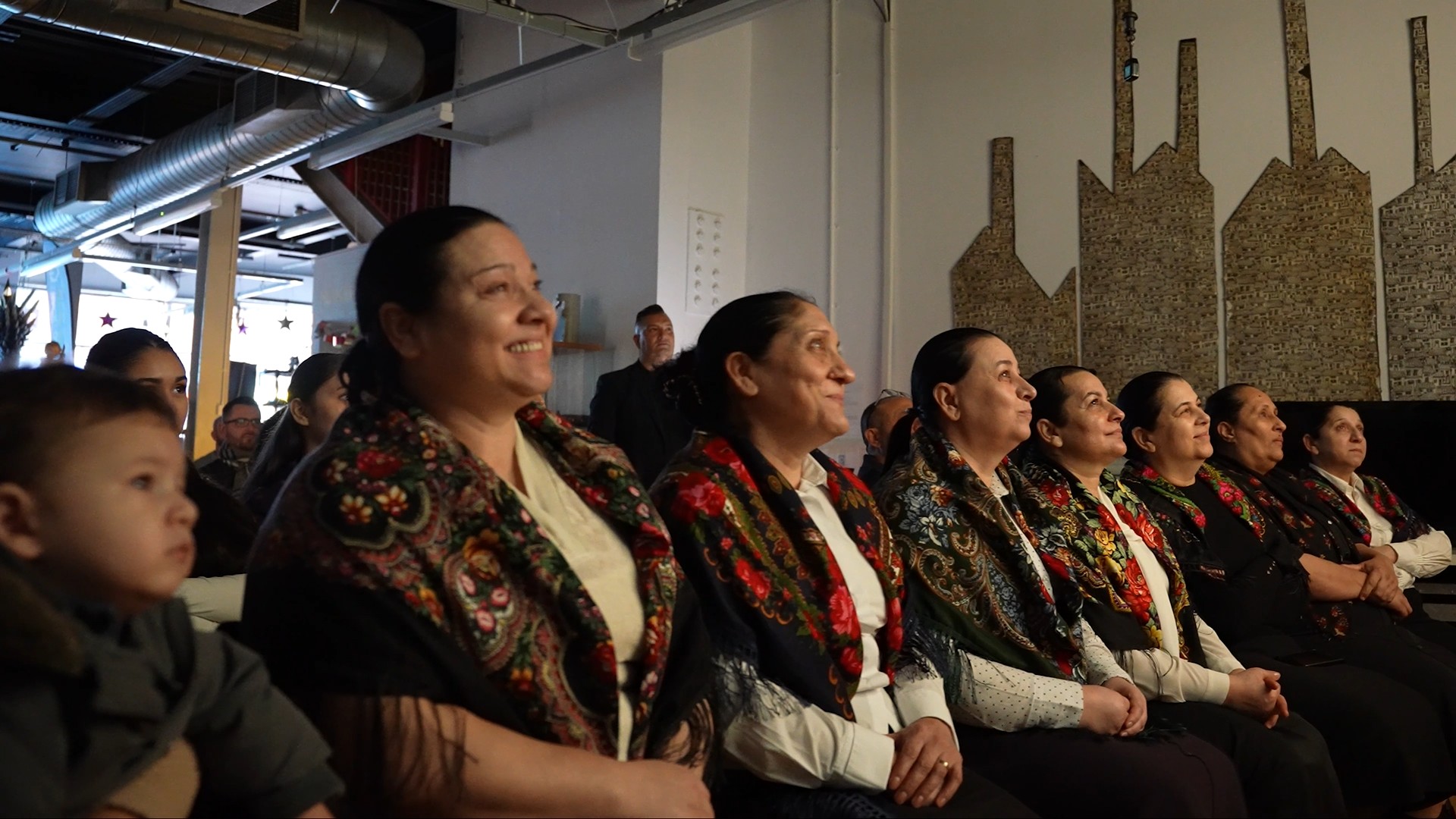
Roma ladies’ joy, recognition and shared pride
Short video clips were shown from the very first event organised by the Roma Ladies themselves: their Christmas celebration in 2021. Held during COVID-19 restrictions, at a time of heightened isolation and uncertainty, the event marked the first moment when the women publicly stepped into organising, hosting and leading a community celebration using the skills developed through the Roma Connections sessions.
The footage included interviews recorded at the time with two people who supported the earliest stages of this journey.
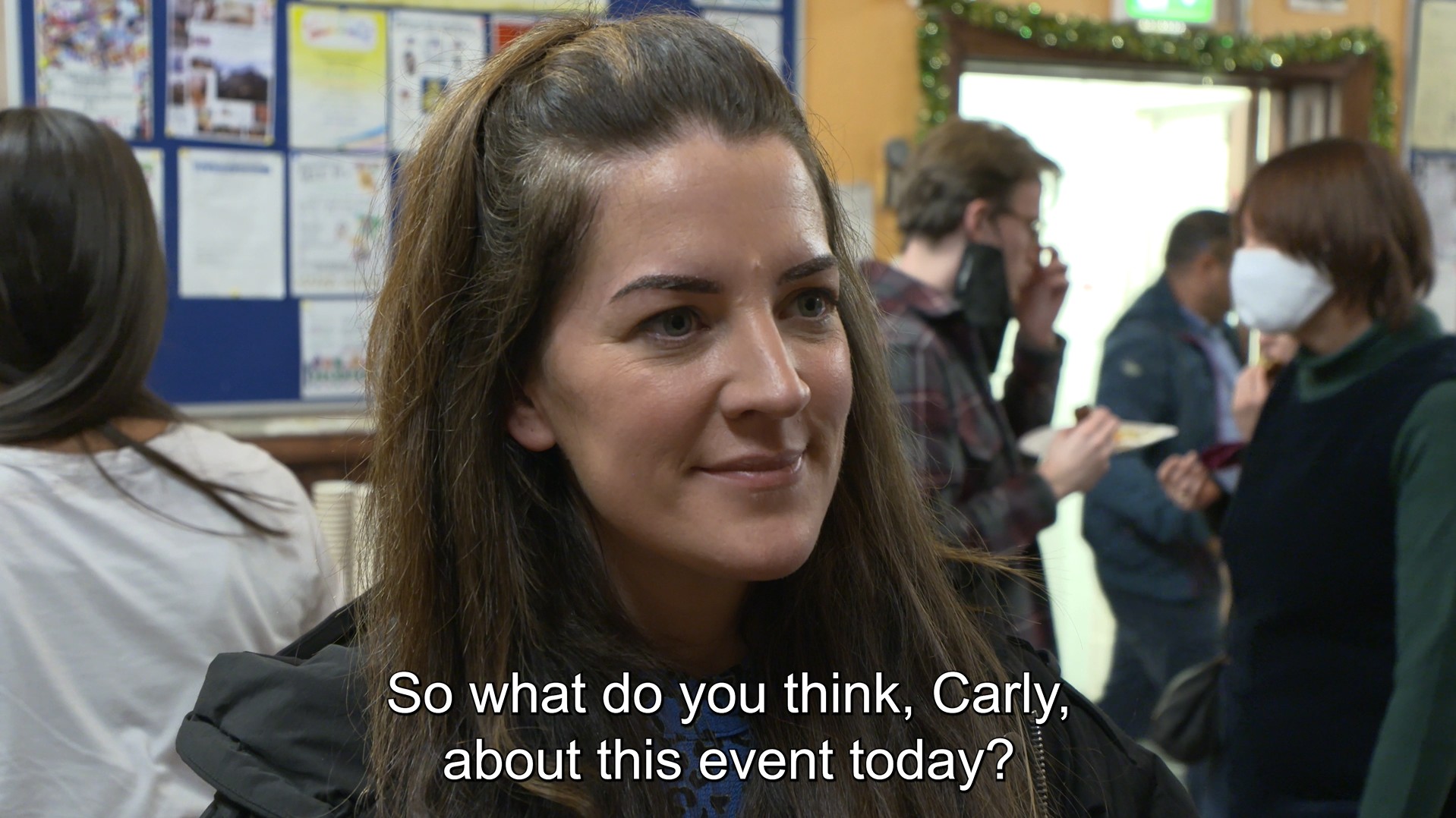
Carly Henderson, head of creative communities at The Dukes Theatre in Lancaster and KaskoSan Trustee at Roma Ladies’ Christmas Event, 8th December 2021
One was Carly Henderson, who in 2020 was working in community participation and learning at Oldham Coliseum. During lockdown, when buildings were closed and resources scarce, she met outdoors at the foot of the Annie Kenney statue in Oldham town centre with Maria Palmai and the Kaskosan team. That informal conversation — without meeting rooms, funding or guarantees — helped co-dream what would later become the Roma Connections project.
The second was Jane Glaysher-White, who in 2013 was working at Voluntary Action Oldham (now Action Together). Over more than a decade, Jane supported Kaskosan through governance development, trustee recruitment, compliance, policies, training and organisational growth. Her long-term guidance played a key role in shaping the organisation Kaskosan is today.
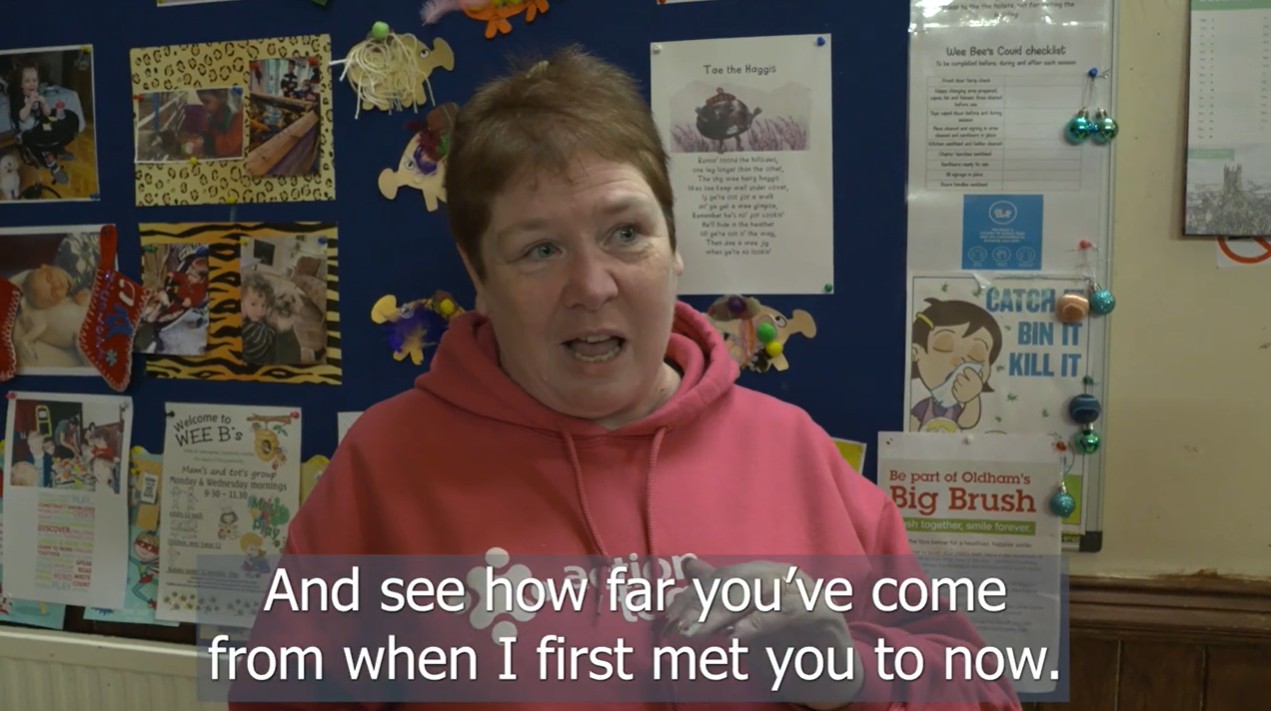
Jane Glaysher-White from Action Together at the Roma Ladies’ Christmas Event on 8 December 2021
Seeing both women again in the early footage, alongside the Roma Ladies, offered a powerful reminder that meaningful change is rarely immediate. It is built through consistency, trust and relationships that endure.
What stood out in those early clips was not performance or polish, but confidence beginning to take root. Pride. Collective ownership. The early foundations of leadership that would later shape Gelem, Gelem.
Ending together
The evening closed not with applause, but with participation.
The audience was invited to learn and sing Gelem, gelem together — the Roma anthem and the film’s title — led in Romani and accompanied on guitar. Voices filled the room. Some tentative, some strong, all present.
Before the night came to a close, Maria Palmai, Adelina Court and Juice Vamosi shared a glimpse of what lies ahead. They spoke about plans to take Gelem, Gelem into the film festival circuit over the coming year, ensuring the film reaches wider audiences while remaining rooted in the community that created it.
They explained that the film will not be released publicly at this stage. Instead, a series of private screenings will be organised across the UK, creating intentional spaces for conversation, learning and reflection. Followers of Kaskosan Roma Charity, alongside partners, allies and communities across the country, were invited to stay connected and to watch this space for further updates.
As the evening drew to a close, Toby Gorniak MBE offered reflections that captured the deeper significance of the moment:
“This isn’t just about seeing Roma on screen. It’s about dignity. It’s about being able to sit in a room with your family and say: this is ours.”
He spoke about how rare it still is for Roma people to encounter their own stories told with care and respect:
“We are used to being spoken about. What happened here was different — Roma women speaking for themselves. That changes something inside you.”
And finally, he reflected on the responsibility that comes with witnessing something like this:
“When you experience this, you don’t leave unchanged. You carry it with you. And that’s how things start to move.”
This was not just a screening.
It was recognition.
It was language.
It was women’s leadership.
It was lived experience taking its rightful place in public space.
And it is only the beginning.
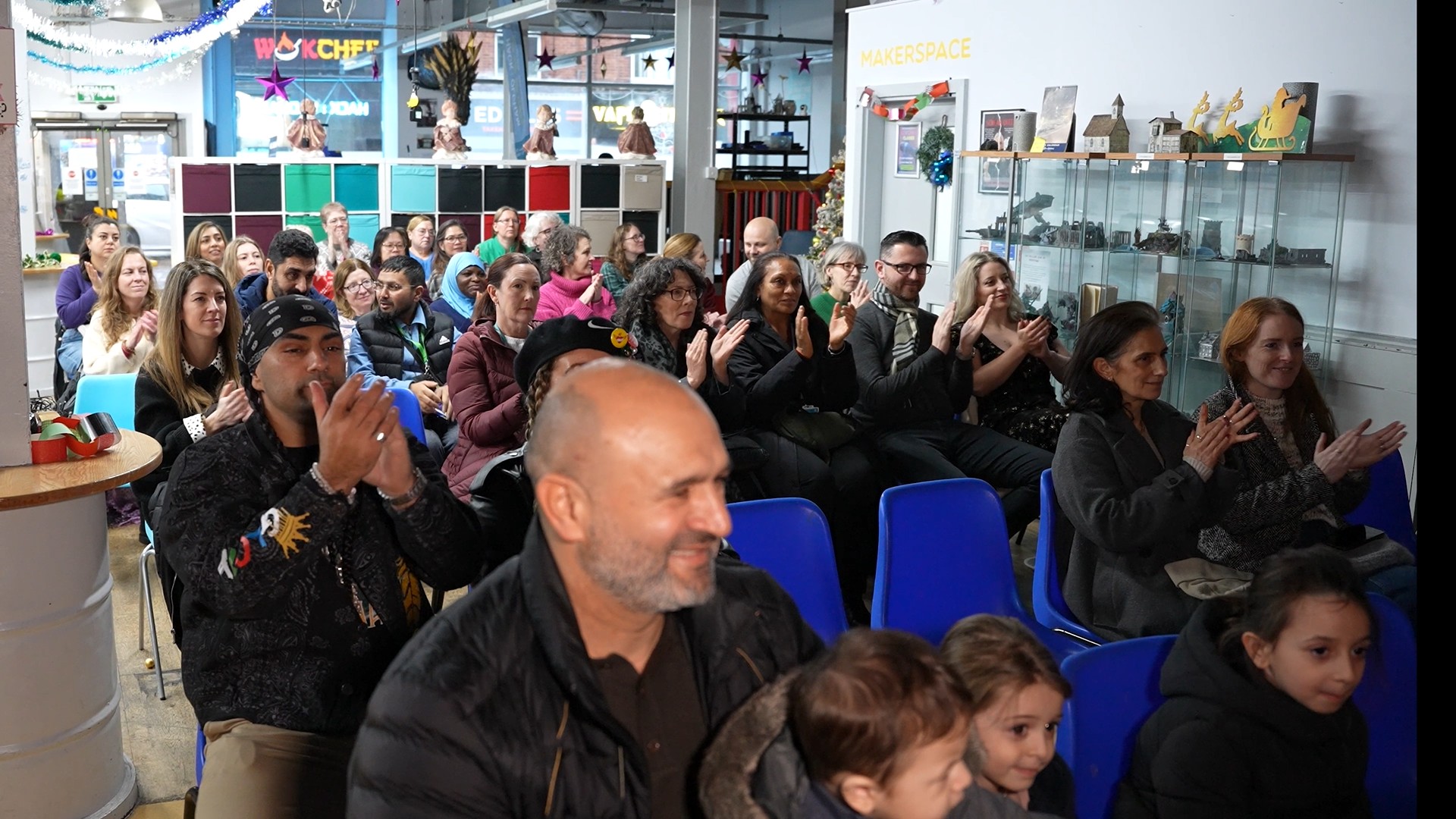
The closing moments of the Gelem, Gelem premiere
Project credits
Gelem, Gelem is a community-led animation developed through the Roma Connections programme.
Roma Connections 2 was delivered in partnership with the University of Salford, which acted as the project’s main academic partner.
Roma Connections 1 and Roma Connections 2 were both funded through the IDEAS Fund by the British Science Association.
Roma Connections 1 was delivered in partnership with Oldham Coliseum and the University of Salford.
Credits
Director & Animation: Adelina Court
Produced by: Maria Palmai, Kaskosan Roma Charity
Created with Roma women from traditional Romani communities, including the Ursari (Bear Trainers) and Kalderash (coppersmith communities).
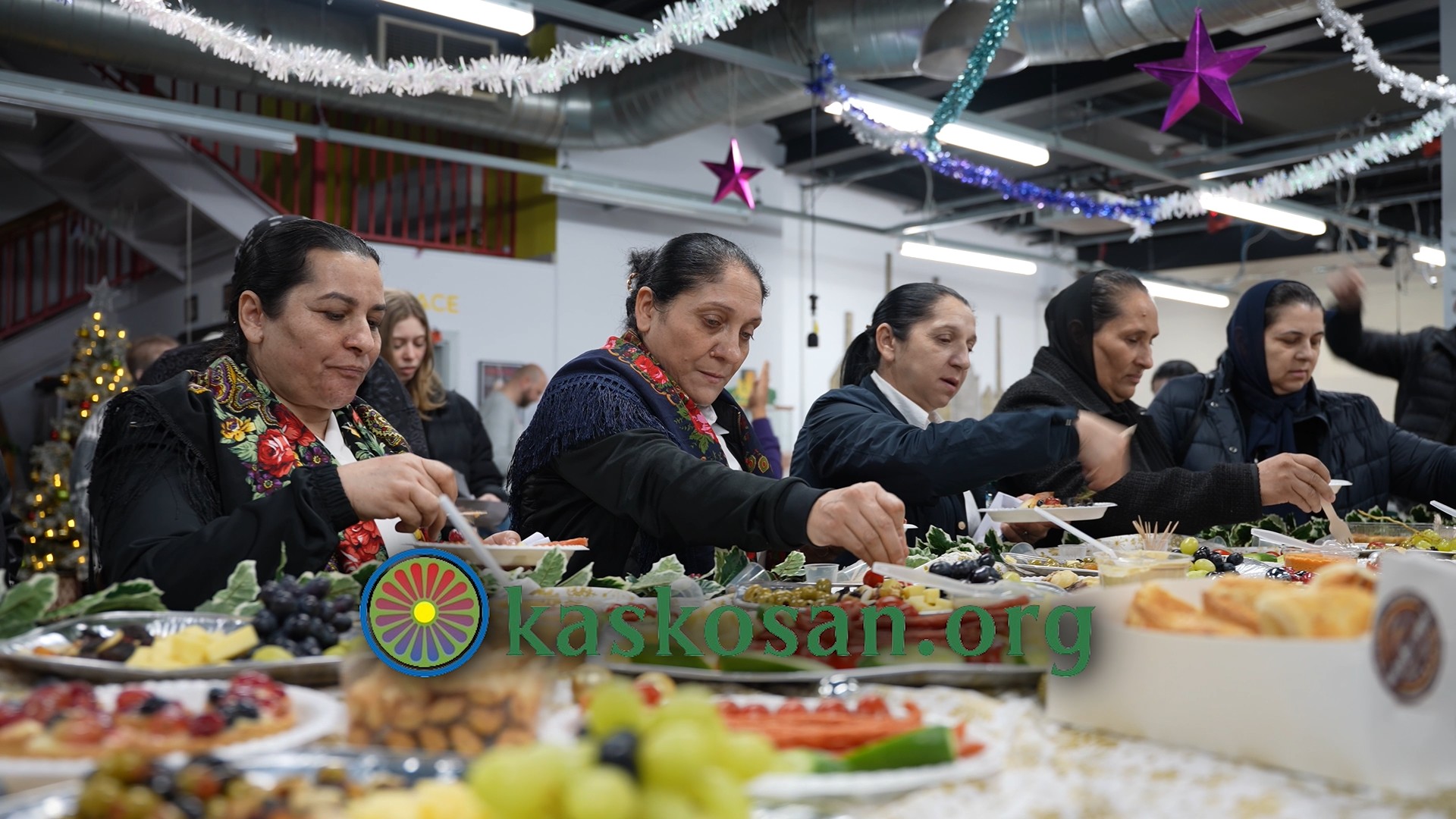
The audience enjoying Transylvanian Roma dishes after the premiere